It’s Halloween weekend, which means we’re all supposed to be afraid of ghosts, monsters, and whatever that thing is making noise in the basement.
But if you’re building a startup, I’ve got a few things that should scare you a whole lot more.

Team Keyriosity conducts customer discovery and collaborates on its business concept during Startup Weekend at Omaha’s Catalyst in spring 2026. The team earned third place, demonstrating the value of testing assumptions and learning from potential customers before moving forward with an idea.
Photo credit: Keyosha Atwater
And no, failure isn’t one of them.
Failure gets all the attention. We hear about it constantly in entrepreneurship. Fail fast. Fail forward. Learn from failure. There’s practically an entire motivational poster industry built around the idea.
But some of the biggest threats to a startup aren’t dramatic failures. They’re the things founders don’t know they don’t know. The assumptions nobody questions. The conversations nobody has. The problems that quietly grow while everyone is busy working on the exciting stuff.
So, in the spirit of Halloween, let’s talk about five things that should be keeping entrepreneurs up at night.
1. The Customer Who Loves Your Idea but Will Never Buy It
This one is particularly sneaky.
You’ve spent months developing something incredible. You show it to a potential customer. Their eyes light up. They tell you it’s brilliant. They say they’d absolutely use it.
Congratulations! You’ve just received a compliment.
You have not necessarily validated a business.
There’s an enormous difference between someone liking your idea and someone being willing to change their behavior, spend their money, or convince their organization to adopt something new.
And in healthcare? The person using your technology might not be the person paying for it. The person paying for it might not be the person deciding whether to purchase it. And the person making that decision might have an entirely different set of priorities.
As Joe Runge explored in What Is … Product-Market Fit?, building something people like isn’t the same as building something people want enough to pay for.
The scary question: Have you identified who actually makes the buying decision, or have you just found people who think your idea is cool?
2. The Intellectual Property Problem You Didn’t Know You Had
Imagine spending two years developing a technology, building a team, and talking to investors, only to discover that the intellectual property situation is more complicated than you thought.
Maybe you disclosed something publicly before discussing patent protection. Maybe a collaborator has ownership rights. Maybe the technology was developed using university resources, and you haven’t had a conversation about licensing.
None of these situations automatically means your startup is doomed. But they can become expensive, time-consuming problems if nobody addresses them early.
For university researchers especially, understanding how invention disclosure, patent protection, licensing, and commercialization work is not optional background information.
It’s part of building the business.
And as we discussed in Welcome to Catalyst, UNeTech Institute!, the partnership between UNeMed and UNeTech helps connect intellectual property management with the practical work of building companies around university discoveries.
The scary question: Do you actually know who owns the technology you’re planning to commercialize?
3. The Regulatory Surprise Waiting Around the Corner
This one is especially relevant to the medical technologies we work with at UNeTech.
You’ve developed a device, software platform, diagnostic tool, or some combination of the three. You’ve tested it. It works. People are excited.
Then somebody asks about your regulatory pathway.
Your what?
Not every healthcare technology requires the same regulatory process, and some don’t require FDA clearance at all. But figuring that out is something you want to do early, not after you’ve built your entire business model around assumptions that turn out to be wrong.
Regulatory requirements can affect everything from product design and clinical testing to development timelines and the amount of funding you’ll need.
And here’s another wrinkle: regulatory clearance doesn’t automatically mean someone will pay for your product. Reimbursement is a different conversation.
This is one reason programs like the Steel Works Health Accelerator matter. Medical technology founders need more than a promising invention. They need the knowledge, mentorship, and commercialization strategy to build a viable company around it.
The scary question: Have you built a realistic commercialization plan, or just a plan for getting the technology to work?
4. The Team That Agrees on Absolutely Everything
I know. This sounds like a dream.
Everyone gets along. Meetings are pleasant. Nobody challenges the founder’s vision. Every new idea gets an enthusiastic thumbs-up.
Terrifying.
One of the most valuable things a startup team can have is someone willing to ask uncomfortable questions.
Why are we building this feature? What evidence supports that decision? Who is going to pay for this? What happens if our assumptions are wrong?
You need people who bring different expertise, experiences, and perspectives to the table. Technical expertise matters. So do business development, operations, regulatory knowledge, finance, and the ability to understand the people you’re trying to serve.
You don’t need a room full of people who think exactly like you.
You need a team that can make the idea better.
We explored the value of different perspectives and relationships in Entrepreneurship Is a Team Sport: What the MTVA Teaches About Relationship-Building. Innovation doesn’t happen in isolation, and the people around an idea can be just as important as the idea itself.
The scary question: Does your team challenge your assumptions, or just reinforce them?
5. The Startup That’s So Busy Building, It Forgets to Learn
This might be the scariest one of all.
Because it looks exactly like progress.
The team is working hard. The prototype is getting better. The pitch deck is beautiful. The website is live. There are meetings and milestones and color-coded spreadsheets.
Everyone is busy.
But when was the last time somebody talked to a potential customer?
When did the team last test an assumption? Learn something unexpected? Change direction because of actual evidence?
Building something is satisfying. Learning that you’ve been building the wrong thing is not.
But finding that out early is a whole lot better than finding out after you’ve spent two years and a few hundred thousand dollars.
At UNeTech, this is one of the reasons we emphasize customer discovery and evidence-based entrepreneurship. Programs like the National Science Foundation’s I-Corps help researchers and entrepreneurs step outside their own assumptions and learn what the market actually needs.
If you want to dig deeper, we’ve written about both finding your first customers the right way and getting help before spending money. Both are worth a read before you invest another dollar in building something nobody has asked for.
And sometimes the most valuable discovery is that the original plan needs to change.
The scary question: Are you making progress toward a viable business, or just getting really good at building something?
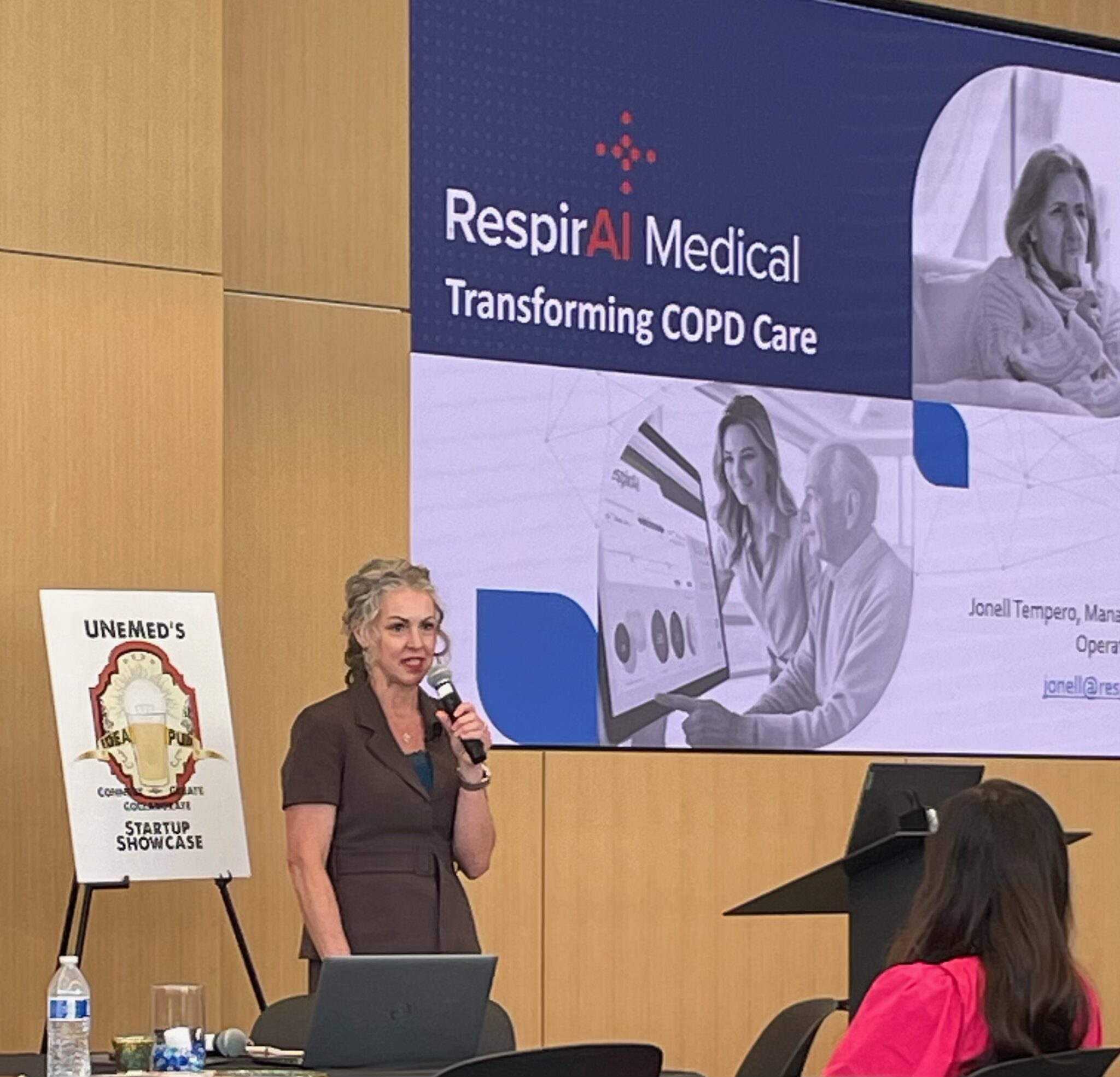
Jonell Tempero from RespirAI presents at UNeMed’s Idea Pub, where entrepreneurs share their innovations, connect with the university’s innovation ecosystem, and create opportunities for questions, feedback, and collaboration.
Photo credit: Stephanie Kidd
So, Should You Be Scared?
A little, maybe.
But here’s the good news: every single one of these risks becomes more manageable when you start asking better questions.
You don’t need to know everything before starting a company. Nobody does. You do need to recognize what you don’t know, find people who can help, and be willing to change your mind when the evidence tells you something different.
That’s not a weakness. That’s entrepreneurship.
At UNeTech, we work with researchers, founders, and innovators who are navigating exactly these kinds of questions. From early-stage customer discovery and team development to commercialization strategy and connecting people with the right resources, our job is to help promising ideas move toward real-world impact.
So enjoy the haunted houses, scary movies, and questionable amounts of Halloween candy this weekend.
And when you get back to work on Monday?
Maybe take another look at that startup plan.
The scariest thing isn’t discovering what you don’t know. It’s never finding out.
Learn more about UNeTech Institute and how we support university innovation and entrepreneurship at UNeTech.org.