Entrepreneurship is often portrayed as a solo journey: one founder, one big idea, one breakthrough moment.
But inside the Maverick Technology Venture Alliance (MTVA) at the University of Nebraska Omaha, students learn something different. Innovation happens through relationships.
Through hands-on experience with inventors, founders, university leaders, and community partners, MTVA students do not just learn how ventures grow; they learn how people grow together.
Learning That Connections Matter
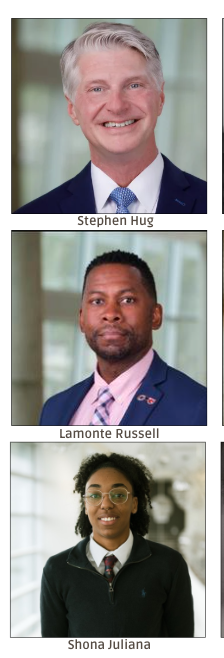
For Shona Juliana, Venture Analyst for the MTVA, one of the biggest lessons has been understanding the real power of relationships.
“I think the biggest thing I have learned is how powerful your connections are. To be honest, I did not fully realize this until I started working at CIEF and saw how the connections I made through MTVA come into play.”
The MTVA is a student-led business strategy program. Under the umbrella of UNO’s Center for Innovation, Entrepreneurship and Franchising, the MTVA builds business strategies for inventions from the faculty and staff of the University of Nebraska Omaha and the University of Nebraska Medical Center. Students work with inventors to conduct a wide variety of business analyses. Inspired by cutting-edge research, students apply entrepreneurship theory to the latest inventions resulting from research across two campuses. In collaborative teams, business students, medical students, and university inventors translate their discoveries into companies that can bring products to market.
The MTVA publishes reports that help define the startup that could be. It is an organization where students help inventors find the business that will bring their invention to market.
Juliana says the experience changed how she thinks about entrepreneurship itself.
“MTVA has shown me how tight-knit the entrepreneurial ecosystem really is. People are always willing to help, and that has helped me view entrepreneurship differently. It does not have to be something you do alone.”
That collaborative approach is central to how the program operates. Students work directly with inventors and founders while building relationships across Omaha’s innovation ecosystem.
“A big part of entrepreneurship is learning how to lean on the people who can help you grow and help take some things off your plate.”
Building Relationships Through Real-World Experience
Unlike traditional classroom learning, the MTVA places students inside active commercialization and innovation work.
Lamonte Russell, UNeTech Institute Strategies and Ventures Manager, leads the MTVA and works with its student venture analysts every day. Russell says that relationship-building is essential to transforming ideas into real ventures.
“In managing the MTVA, I have learned that building strong relationships with faculty inventors, student analysts, university leadership, investors, and community partners is crucial for successfully transforming an idea from concept to commercialization.”
The collaborative structure of the program gives students exposure to the many stakeholders involved in innovation.
“Our close collaboration with the UNeTech Institute, UNeMed, and the University of Nebraska Omaha ecosystem has demonstrated that entrepreneurship flourishes when collaboration is deliberate and relationships are nurtured over time,” Russell said.
Students are not observing from the sidelines. They are participating directly in the work.
“The Student Venture Analysts engage directly with inventors, licensing specialists, university faculty mentors, and community business professionals to assess technologies and develop commercialization strategies,” Russell said.
“MTVA gives students real-world, hands-on experience working with inventors, founders, and industry leaders,” said Stephen Hug, UNeTech Institute’s entrepreneur-in-residence.
This blog from 2022 provides an excellent example of the type of work Juliana describes. MTVA venture analysts worked with inventors, licensing specialists, university faculty mentors, and local business leaders to create a strategy report for what was at the time a new idea—automated antibiogram. In 2022, it was simply a technology. Four years later in 2026, it is an idea with a business use case, and a CEO, Sheila Fields, is moving that idea forward.
Learning to Listen
One of the strongest lessons in relationship-building comes through customer discovery.
Russell points to the National Science Foundation I-Corps methodology as one of the program’s most impactful learning experiences.
“My favorite lesson that teaches relationship building in the MTVA is the customer discovery process through the I-Corps methodology.” Rather than relying on assumptions, students are pushed to engage directly with potential users, customers, and collaborators.
“This framework forces the student venture analyst to step outside assumptions and directly engage with real potential customers with pain points who may become partners or advocates,” Russell said. The process teaches skills that extend far beyond entrepreneurship.
“The Student Venture Analyst learns how to ask meaningful questions, actively listen, and refine business assumptions based on feedback rather than personal bias,” Russell said.
Interviewing potential customers through the I-Corps framework and methodology teaches MTVA analysts a series of transferable skills, including how to approach research with an open mind and curiosity, how to check their own implicit bias, and how to view and sort research data.
“The MTVA helps them build leadership, collaboration, and critical thinking skills,” said Hug. “It also shows them that entrepreneurship is a team sport.”
A Student-Led Culture of Service
At its core, the MTVA is about more than commercialization strategy. It is about building a culture where students support one another and create opportunities together.
“The MTVA is a student-led organization focused on service and consistency,” Russell said.
That emphasis on trust and support shapes how students lead.
“People remember how you support them, communicate during challenges, and create opportunities for their growth,” Russell said
For Russell, the strongest leaders are not necessarily the loudest or most controlling. “I have found that the strongest leaders are not those who seek to control every outcome, but rather those who build trust, remove barriers, and help others succeed.”
And ultimately, that is the environment the MTVA aims to create for its students. “This is how our venture analysts grow and thrive,” Russell said.
Conclusion
In a world that often celebrates individual success stories, the MTVA reminds students that innovation is deeply collaborative. The relationships students build — with founders, faculty, mentors, and one another — become the foundation for future ventures, careers, and community impact.
If you’d like to stay connected with us, be sure to sign up for our newsletter or follow us on LinkedIn and Instagram for updates, insights, and new opportunities. If you’re a student, entrepreneur, or investor interested in working with us, you can connect directly with a member of our team—we’d love to hear from you.