
Oh my gosh, welcome to Start-Up Update. My name is Joe Runge and boy do we have a stellar show for you tonight. My guest is Doug Miller, original CEO and now CPO of Impower Health. What does the P stand for? You’re going to have to read on to find out.
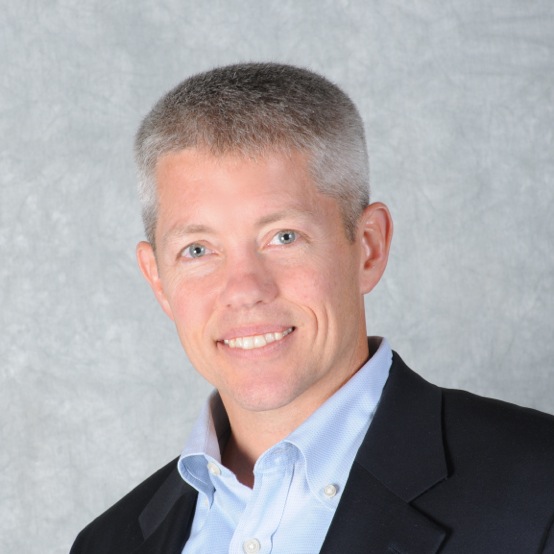
Doug Miller, founder and original CEO of IMPOWER HEALTH.
Start-Up Update is a new feature here at UNeTech.org where we periodically check in with our founders and our startups. We see what’s been happening for our companies by asking a variety of questions, but for each startup, we ask three largely similar questions. The first one is: Do you remember the first time you heard about the technology? Our goal is to remind our audience that the journey of a thousand treadmills starts with fastening the safety clip to your shirt. The second is: What would your younger self say to this version of your successful self? The last is: What’s next for the startup?
Doug Miller is the founder of Impower Health, a company that commercializes self-pacing treadmill technology developed at UNO’s biomechanics lab. The algorithm tracks gait in real-time and adjusts treadmill speed to match natural pace—technology that every major exercise equipment manufacturer has attempted and failed to build. In many ways, Impower is UNeTech’s prototype startup, and we’re excited to revisit it in early 2026: Impower is nearly through its seed fund (investors, still time to hop on a moving train!!) and poised to launch its first three pilot studies.
You’ve heard the questions before (well, not this time I guess) but the answers are always different. Let’s find out what’s going on with Impower Health!
The Chuckle
I asked Doug to tell me about the first time he heard about the UNO self-pacing treadmill, and if he appreciated that it was the moment his life would forever be altered by that invention.
Doug Miller laughed when the University of Nebraska Omaha first called in 2016.
He was Chief Architect and Senior Director of Engineering at Life Fitness, the exercise equipment manufacturer. In his role overseeing consoles and bases for treadmills, bikes, and ellipticals, he got the call. Some graduate student programs had filed patents on self-pacing treadmill technology and were ringing around to manufacturers. Would Life Fitness be interested in a licensing deal?
“I kind of chuckled at the idea,” Doug recalled. “Good luck. We have all tried it. All the major manufacturers have tried it. It is really hard to do.”
He gave them a list of technical hurdles. “If you can solve those things, give me a call back.” The conversation ended on amicable terms. UNO got similar feedback from other manufacturers, Doug learned. The graduate student graduated. The technology got shelved.
Then fall 2020 arrived. Dr. Brian Knarr had joined the university and wanted to resurrect the program. I called Doug back—but this time with a different approach. Instead of the expensive off-treadmill motion capture system they had been using to validate the algorithm, they wanted to integrate everything directly into the treadmill itself.
Doug had left Life Fitness by then. He agreed to help consult. Six months of conversations followed. Then came the email in spring 2021. Video attached—Dr. Knarr’s team is walking and running on the integrated treadmill. Self-pacing works.
“Woohoo!”
Then immediately: “Oh my god, it works. Now all these things I said I could do—I have got to decide, put up or shut up, jump in and actually keep running with this.”
“Equal parts excitement and anxiety,” Doug said. The technology worked. Which meant everything he had told them was possible now had to actually happen.
The Challenge
If Doug could talk to his high school self and say that some decades later he would be leading a company that has raised half a million dollars, launching technology that is fabulously complicated and cutting-edge, what would that younger version of himself say?
Doug grew up in a small town in Wisconsin. Tight-knit community. Everyone knew everyone, which was both the upside and the downside. He played football and wrestled, then went to Marquette University. Slightly larger school than Kewaskum, but small by university standards. A big step up. Then came Motorola, where he spent a couple of decades moving from engineering into business operations.
But there is a moment from his Marquette days that Doug is almost afraid to share.
Walking between buildings one afternoon with friends and a professor of engineering, discussing all the technology emerging at the time. Copiers. People in space. The pace of innovation felt breathtaking.
And Doug, earnest engineering student Doug, asked a question that still makes him cringe: “What’s left to invent?”
The professor just laughed.
“Here is the thing about younger versions of ourselves,” Doug reflected. “Not knowing what you do not know.” He explained it as incredulity, not at the technology itself, though tracking human gait patterns with AI and turning them into actionable medical insights is objectively sophisticated work. Incredulity, not at the leadership role, though transitioning from engineer to CEO. Incredulity at the startup company itself, even though it’s raised half a million dollars.
“Door number three,” Doug says. “Naivety.”
His guidance to younger Doug would be simple: “There is a lot more to come. Embrace it. Do not be afraid. Jump in. Be ready to fall and get back up again.”
What impressed me was the gentleness with which Doug said it. He appreciated the naivety of his high school self, who earnestly asked a question that now makes him squirm, couldn’t even process what Doug’s accomplishments in 2025 would even mean. He knew that the wisdom would come. That the rinse, wash, repeat of a lifetime of challenges would inevitably, almost kindly, bring him to where he is today.
The North Star
Doug has had a tremendous last six months at Impower. I wanted to know what is ahead—what he is most excited about as we move from winter into summer, and where he sees this project in five years.
“The reward for good work is more work,” Doug noted. And Doug’s reward as CEO is to step into a new role—Chief Product Officer for a bigger, better Impower Health.
Three pilot sites go live in the second quarter. The University of Nebraska Omaha’s biomechanics team is refining the algorithm, everything under the hood. A fractional engineering team handles the rest: cloud architecture, Bluetooth connectivity, the productization work required to move from research prototype to commercial deployment.
The pilot partners could not be better positioned. UNO’s Clinical Movement Analysis Lab. A traumatic brain and spinal injury rehabilitation group in Omaha. And a healthcare system with co-located physical therapy offices and a YMCA housing roughly forty treadmills—all accessible without walking outside.
Data collection. White papers. Commercial launch by year’s end.
But the real bet Doug is making sits beyond the pilots: AI-driven biomarker tracking. Algorithms that adjust to you specifically—your gait, your injury patterns, your aging neuromuscular changes. The treadmill that identifies form breakdown before you are halfway through training with a blown knee.
The market dynamics favor this approach. The aging population is growing, which benefits Impower’s thesis: “Was it Newton’s Third Law, a body in motion tends to stay in motion, a body at rest? Stays at rest?” Leave it to an engineer to phrase market opportunities like it’s physics 101.
The five-year vision is licensing, not manufacturing. Impower does not want to compete on hardware—supply chain management and cost of goods are brutal in that business. Let the manufacturers who have been doing it for decades continue doing it. Impower brings the capability they cannot build themselves: intelligence that transforms their existing products into tools that do better things for more people.
“I do not even know all the ways this is going to play out in the next five and ten years,” Doug admitted. But he is no longer the engineer asking what’s left to invent.
___
And that’s our show! A huge thank you to Brian Knarr, Nick Stergiou, Casey Wiens, Molly Schieber, William Denton, Proven Ventures, Boomerang Ventures, Invest Nebraska, Burlington Capital, the UNeTech Institute, UNeMed Corporation, Trent McCracken, and of course, to Doug and Susan Miller